| |
The Louisiana Purchase
p.22 |
| |
In the early 1800s, a great deal of the land to the west of Mississippi River belonged to France. Because the Mississippi River was an important transportation route, President Jefferson wanted to make sure that the United States maintained the right to travel along it. At the time, Jefferson also believed that the Mississippi River might provide a way for boats to travel across the United States to the Pacific Ocean.
Jefferson sent two representatives, James Monroe and Robert Livingston, to France to try to purchase New Orleans, a city strategically located at the mouth of the Mississippi. Much to their surprise, the Emperor Napoleon offered them not just the city but the entire Louisiana Territory. At that time, Napoleon was facing a war in Europe with Great Britain and did not want to have to protect this territory in America as well.
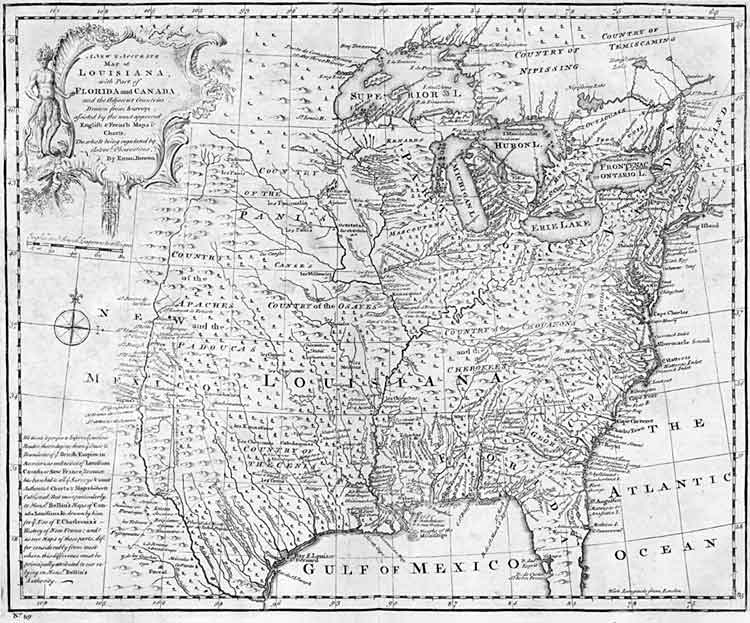
Stretching from Canada in the north to the Gulf of Mexico in the south and from the Mississippi River to the Rocky Mountains, the Louisiana Territory doubled the size of the United States, allowing it to become a true world power. Jefferson was able to buy the more than 800,000 square miles of land for just $15,000,000—an average of four cents per acre.
|
|
|
|
|
 |

|
| |
 |
This map from 1807 shows just how big Louisiana Territory was. |
 |
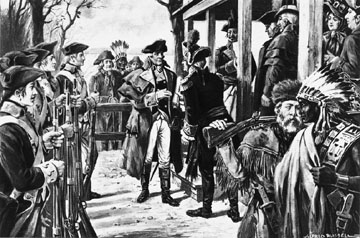
The French sold their claim to Louisiana Territory to the United States in 1803. Part of Lewis and Clark's mission was to spread word about this exchange to the people living in the territory. |
|
| |
 |
 |
| |
The Louisiana Purchase Treaty
Read the articles of the treaty that finalized the Louisana Purchase.
The Original Louisiana Purchase Treaty
View the original copy of the Louisiana Purchase Treaty held at the National Archives.
Louisiana Purchase Bicentennial
Learn more about the Louisiana Purchase at this site complete with an overview of the events leading up to the Purchase, a timeline, and historic documents.
|
| |
|

 The Louisiana Purchase
p.22
The Louisiana Purchase
p.22