| |
Dr. Benjamin Rush
p.18 |
| |
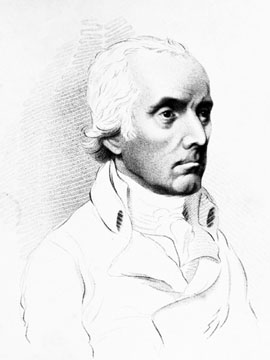
Benjamin Rush was a respected and important person in the early days of our country. He was a physician, a member of the Continental Congress, a signer of the Declaration of Independence, surgeon general of the Continental Army, a professor, and the treasurer of the U.S. Mint.
Rush was born in Byberry (now a section of Philadelphia) on January 4, 1746. He studied hard as a child and graduated from the College of New Jersey (now Princeton University) in 1760, when he was just fourteen years old. He originally wanted to become a lawyer, but changed his mind after graduation and studied medicine for six years in the office of a Philadelphia physician. He continued his education at the University of Edinburgh, Scotland. He also spent time in London and attended medical lectures in Paris. It was there that he and Benjamin Franklin became friends—such good friends, in fact, that Franklin helped Rush pay his expenses.
In 1769, Rush returned to Philadelphia and opened his medical practice. In that same year, he became a chemistry professor at the college of Philadelphia (later the University of Pennsylvania), the first medical school in America. Rush became a member of the Continental Congress in 1776, but did not receive great fame until a yellow fever epidemic struck Philadelphia in 1793. Rush, the city's most-respected physician, worked tirelessly sometimes treating 100 patients in a day.
One of Rush's more controversial practices was the letting of blood to cure illness. It was believed at the time that some patients could be cured of illness by getting rid of “bad blood” that was in their systems. In order to do this, doctors would drain blood from their bodies. Many people were against this practice, believing that it did far more harm than good.
Rush was also known for his social activism. He wrote against slavery, capital punishment, alcohol, tobacco, and war. He also founded the first American anti-slavery society, and promoted free public schools and the education of women. He died in 1813.
|
|
|
|
|
 |

|
| |
 |
In addition to his many other accomplishments, Benjamin Rush taught at the first medical school in the United States. |
 |
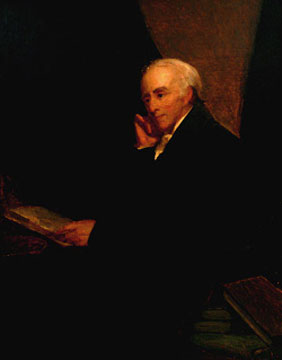
Like Charles Wilson Peale and Thomas Jefferson, Dr. Rush was also a member of the American Philosophical Society, where this portrait hangs today.
The American Philosophical Society |
|
| |
 |
 |
| |
Benjamin Rush as an Abolitionist
Find out more about Benjamin Rush's efforts to help African Americans and to end slavery.
Medical Practices in the 1800s
Find out more about medicine in the 1800s and the medical advice and training given to Meriwether Lewis by Dr. Rush before he set off on his expedition.
Yellow Fever
Quick questions and answers tell you all about yellow fever.
|
| |
|

 Dr. Benjamin Rush
p.18
Dr. Benjamin Rush
p.18