| |
Fire-fighting in the 19th Century
p.42 |
| |
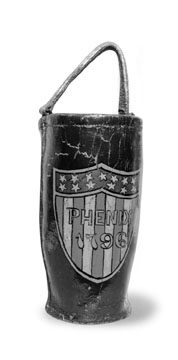
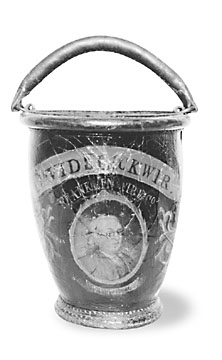
In the early days of the American colonies, there were no organized fire departments. Most property owners were required to keep their own fire buckets. If there was a fire to put out, all of the residents in a town or city were expected to bring their fire buckets and form a bucket brigade to put out the fire. In a bucket brigade, long lines of people passed buckets full of water from a well to the fire and then sent the empty buckets back to be refilled. Alarms were sounded by church bells, gongs, and sometimes just word-of-mouth.
This was not an effective way to fight fires, and many houses and buildings were lost. This prompted people to begin to organize volunteer fire departments. Benjamin Franklin, George Washington, and Thomas Jefferson were all among these early volunteers.
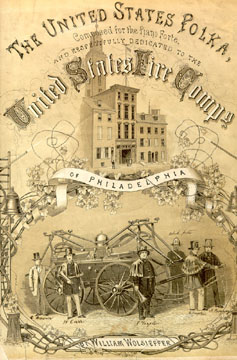
In 1664, Boston became the first city to purchase a fire engine. Philadelphia followed in 1719 and New York in 1731. These fire engines were not at all like the ones we think of today. They were more like carts that carried long hoses and large pumps that had to be operated by hand. The firefighters would pull these carts to the scene of the fire themselves. In the mid-1800s, people began using horse-drawn fire engines with steam-powered pumps.
In many places, the volunteers were not part of a citywide fire department but of various smaller fire organizations or companies. Philadelphia alone had more than forty-five fire companies in the early 1800s. These companies were either Hose Companies or Hook and Ladder Companies, and they worked together to put out the fires. Hose Companies were in charge of finding the water source, manning the pumps, and fighting the fire with hoses. The Hook and Ladder Companies were responsible for going into the buildings and rescuing anyone trapped inside. People took great pride in their local companies and their members.
As populations in the cities increased, it was no longer possible for volunteers to effectively battle all of the fires. Cincinnati was the first city to organize a paid department in 1853 with New York following in 1865 and Philadelphia in 1871. For many small towns, however, this change was not necessary. Even today, there are quite a few places that rely on strictly volunteer fire departments.
|
|
|
|
|
|



 Fire-fighting in the 19th Century
p.42
Fire-fighting in the 19th Century
p.42