| |
The Fur Trade
p.39 |
| |
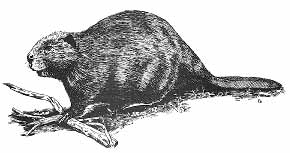
Fur trading in North America began in the 1500s as a way to develop relations with the First, or Native Americans. French explorers arrived in Eastern Canada and offered the First Americans kettles, knives, and other gifts. In return, the First Americans gave the explorers pelts of animals they had trapped. There was a great demand for furs in Europe—especially beaver for hats.
Traders were often the first people to move to an unexplored territory, and in many cases, their simple trading posts became booming cities. When English settlers began to arrive in the colonies in the 1600s, they developed the fur trade throughout the northeast from Maine to Georgia.
By the late 1700s, the fur trade on the East Coast was in decline. Although demand was still heavy for furs, over-trapping and land clearing for settlements had made fur-bearing animals scarce. Help for the industry came in the early 1800s with the exploration into the recently purchased Louisiana Territory. Expeditions like the one led by Lewis and Clark opened up the West for traders and identified good locations for government fur factories.
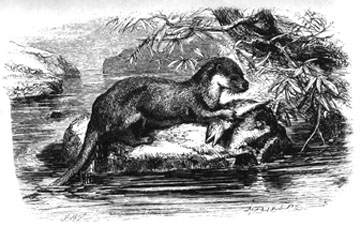
Different furs had different uses. The raccoon fur was made into coats and women's muffs or hand-warmers, and deerskin was used for gloves and pants. But in the 1830s, the fashion in Europe moved away from beaver hats to hats made of silk, and with this slight shift came the end of the fur trade.
|
|
|
|
|
|



 The Fur Trade
p.39
The Fur Trade
p.39