| |
Charles Wilson Peale and his Repository for Natural Curiosities
p.33 |
| |
Charles Wilson Peale is probably best known as a famous painter and portrait artist, but he was also a naturalist, inventor, legislator, museum proprietor, and father of seventeen. Born in 1741, he was first apprenticed to a saddle-maker in Annapolis, Maryland. He later taught himself other trades, including watch-making, upholstery, and sign painting. Eventually turning to portrait painting, he painted the earliest known portrait of George Washington in 1772. After studying art in London, Peale settled in Philadelphia in 1776.
During the Revolutionary War, Peale served as a captain of volunteers, taking the opportunity to paint portraits of military leaders whenever he could. In 1779, Peale was elected to the Pennsylvania legislature, and in 1784 he established Peale's Museum.
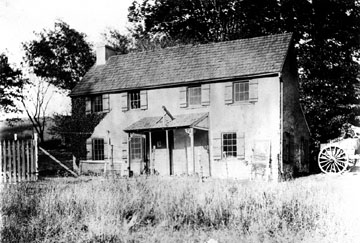
Peale's Museum first opened in the studio of Peale's home. In addition to Peale's own paintings, Peale's Museum also had one of the first archeological collections of Native, or First American artifacts, statues made of wax, and stuffed specimens of many different species of animals on display. It was his hope to have examples of every species of animal and bird in North and South America.
Lewis and Clark brought back many new animals for Peale, including a prong-horned antelope (the only known specimen of its kind), Lewis' woodpecker, Clark's crow, and a California condor. Eventually, the museum became home to more exotic species, including an anteater and a giraffe (known at the time as a camel-leopard).
In 1801, Peale led a dig to unearth the skeleton of a mastodon from a farm in New York. He reassembled the bones in his museum, and it became one the most visited natural historic exhibits of the time.
Peale's expanding collection soon outgrew his studio. He moved first in 1794 to Philosophical Hall, which was also home to the American Philosophical Society. Then, in 1802, the museum was moved again to Independence Hall, where it remained until it closed in 1854.
Peale's other notable achievements include helping to found the Pennsylvania Academy of the Fine Arts and co-inventing, with John Isaac Hawkins, the antique polygraph—a machine that made it possible to someone to write two copies of a letter at once. Peale died in 1827 at the age of 86.
|
|
|
|
|
 |

|
| |
 |
Charles Wilson Peale first opened his museum in the studio of his home. |
 |
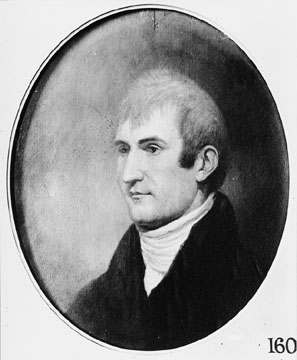
A highly skilled portrait artist, Peale painted this picture of Meriwether Lewis. |
 |
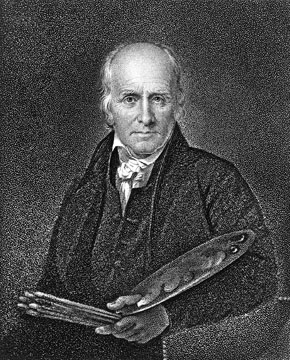
One of Charles Wilson Peale's most lasting achievements was founding the Pennsylvania Academy of the Fine Arts. |

|
| |
 |
 |
| |
Charles Willson Peale's Museum
Find out more about Peale's Museum from the Academy of Natural Science's Web site.
Charles Wilson Peale
Learn more about Charles Wilson Peale and see some of his most famous paintings.
Lewis and Clark as Naturalists
Learn about the animals that Lewis and Clark discovered on their expedition, some of which they were able to bring back for Peale to display in his museum.
|
| |
|

 Charles Wilson Peale and his Repository for Natural Curiosities
p.33
Charles Wilson Peale and his Repository for Natural Curiosities
p.33