| |
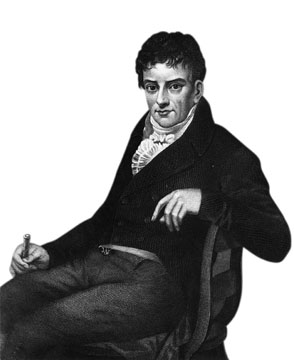
Robert Fulton
p.33 |
| |
Robert Fulton was born in 1765, on a farm in Little Britain, Pennsylvania. A portrait artist, like Charles Wilson Peale, he studied painting in London. However, Fulton's interests shifted from painting to engineering. He worked on several canal projects in England and then, in 1796, moved to Paris.
Once in France, Fulton devoted his attention to the design of submarines. In 1800, he demonstrated an experimental submarine called the Nautilus. The Nautilus could fold its mast and sails flat on the deck and dive to a depth of twenty-five feet. Neither the French nor the British were interested in Fulton's new boat, but it did catch the eye of Robert Livingston, America's ambassador to France.
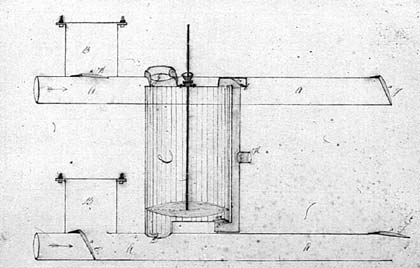
Livingston and Fulton began a partnership, and in 1802, with Livingston's help, Fulton launched a small, steam-driven paddle-wheel boat that traveled at three miles per hour. At this point, Livingston convinced Fulton to return to the United States to concentrate on steamboat design.
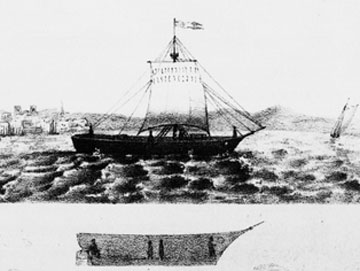
In 1806 Fulton settled in New York City, where Livingston had been given a monopoly on steamboat transportation throughout New York State as long as he could build a steamboat that would travel at four miles per hour. In answer to this challenge, Fulton designed the Clermont. On August 18, 1807, the Clermont traveled up the Hudson River from New York City to Albany at approximately five miles per hour. The trip took thirty-two hours—much faster than the four days required to cover the same trip in a sailboat.
Fulton went on to design the first steamboat to travel on the Mississippi and the first steam warship. He died in New York City on February 24, 1815.
|
|
|
|
|
|



 Robert Fulton
p.33
Robert Fulton
p.33