| |
Inventions of the early 1800s
p.28 |
| |
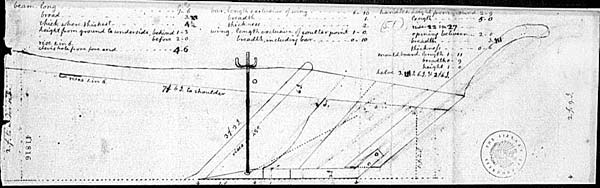
The United States patent office opened its doors in 1790, just in time for the slew of new inventions that were to come out in the next century. Thomas Jefferson was a great believer in innovation, and personally invented a wheel cipher that was used for coding and decoding messages and a piece of farm equipment called a moldboard plow. He is sometimes credited for inventing the first copying machine, called a polygraph. But this machine, which allowed one to write two copies of a letter at the same time, was actually first invented by John Isaac Hawkins of England and later improved by Charles Wilson Peale, who held the U.S. rights for it.
Steam power was the basis for many inventions in the early 1800s. In 1801, Philadelphia used the first steam-powered pumping station to provide water through the city's water works. In 1805, Oliver Evans introduced his Oruktor Amphibolis, a vehicle that used steam power to travel on land and by water. In the early 1800s, in England, , the invention of the steam-powered loom for weaving cloth helped spark the whole Industrial Revolution. And Robert Fulton revolutionized travel when he patented the steamboat in 1807.
Advancements were also made in food packaging, communications, and agriculture. Many of these were precursors to things that we still use today. Cans for storing foods were invented in 1810; however, it wasn't until 1858 that the first can opener was patented. The coffee pot (1806), the sewing machine (1833), electric power tools (1837), the telegraph (1844), and porcelain false teeth (1845) all came out in the first half of the nineteenth century. This was just the beginning of a rapid rise of inventions during the 1800s that touched almost every aspect of life—a trend that continued through the twentieth century and is still going strong today.
|
|
|
|
|
 |

|
| |
 |
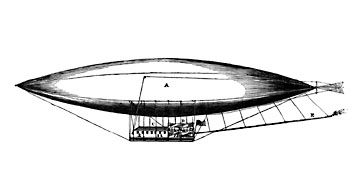
Many inventions of the 1800s focused on transportation, both by water and air. These drawings of a traveling balloon were published in 1834. |
 |
Thomas Jefferson's plows were specifically designed for hillside plowing. |
 |
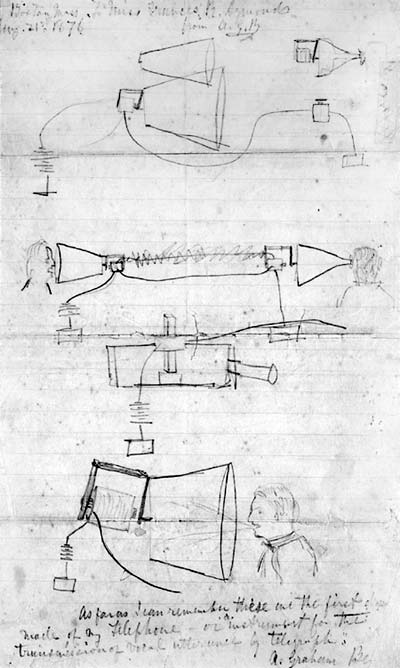
See a series of sketches made by Alexander Graham Bell around 1876, demonstrating how the telephone would work. According to the inscription made by Bell, “...these are the first drawings made of my telephone....” |

|
| |
 |
 |
| |
Famous Inventions from A to Z
From "adhesive/glue" to "zipper," find out when things were invented and by whom.
American Experience Technology Timeline
Scroll through an interactive timeline showing some of America's technological innovations and inventions.
National Inventor's Hall of Fame
Visit the National Inventor's Hall of Fame and learn more about American Inventors.
|
| |
|


 Inventions of the early 1800s
p.28
Inventions of the early 1800s
p.28