| |
Relations Between First Americans and the Pioneers
p.24 |
| |
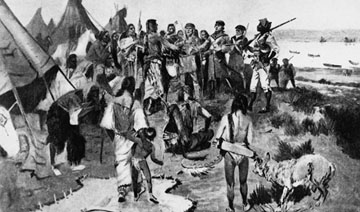
When the Lewis and Clark Expedition made its trip through the West, they met more than forty First, or Native, American tribes. These tribes were often very different from one another. Some were migrant hunters, others grew crops and set up more permanent settlements, and many had their own unique languages. They also varied in the amount of contact they had previously had with non First Americans. Many had never seen white men before, and almost none of them had ever seen anyone like Clark's slave, York, who was an African American.
Not long after Lewis and Clark finished their journey, pioneers began to settle in the newly explored West. There are many accounts of First Americans being helpful to pioneers; giving them directions, serving as guides, and selling them food and horses. In some cases, the First Americans avoided the pioneers because of the germs they carried. The First Americans had never come into contact with diseases like smallpox, cholera, or measles and had no immunity to them. Contact with settlers could be deadly for the First Americans.
The main conflicts between pioneers and First Americans were due, not surprisingly, to land disputes. The pioneers believed that it was God's will that America extend from the Atlantic to the Pacific oceans. This idea, called “Manifest Destiny”, meant that it was their right to claim the land in the West as their own. The First Americans living there often disagreed.
In order to gain the rights to this land, the government negotiated treaties with the First Americans. However, it wasn't always clear what the two sides had agreed upon in these treaties, and this lead to further disputes.
|
|
|
|
|
|


 Relations Between First Americans and the Pioneers
p.24
Relations Between First Americans and the Pioneers
p.24