| |
The Declaration of Independence
p.13 |
| |
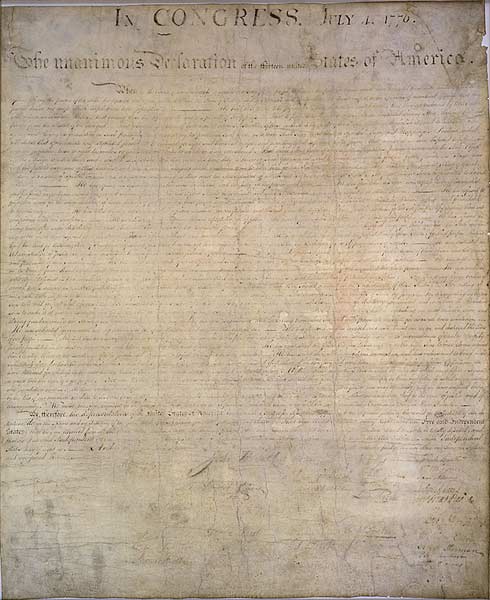
In June of 1776, the Continental Congress appointed a committee to write a document to outline the reasons that the Colonies were demanding independence from Great Britain. The committee consisted of John Adams of Massachusetts, Roger Sherman of Connecticut, Benjamin Franklin of Pennsylvania, Robert R. Livingston of New York, and Thomas Jefferson of Virginia. The committee agreed that Jefferson should be the one to write the Declaration.
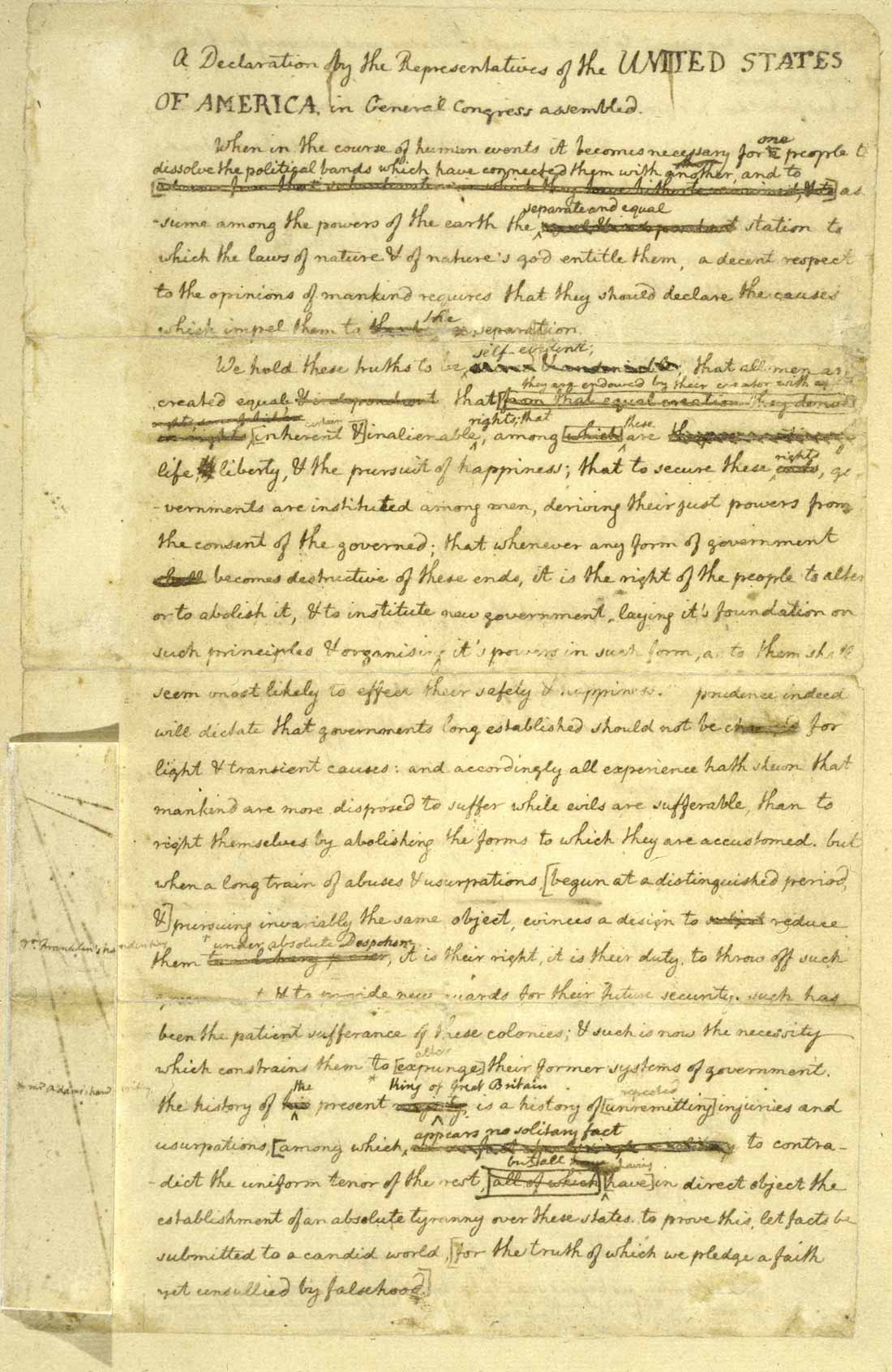
Jefferson started his first draft on June 11, and finished writing the Declaration of Independence on June 28. In it, Jefferson states that every man has a right to “life, liberty, and the pursuit of happiness” and that it is the government's duty to protect that right. The government of England had violated the rights of the Colonists and left them with no other choice but revolt.
The Congress used the Declaration to gain support for their claim for independence, both in the Colonies and abroad. France's support was particularly important as the Colonies were relying on the French as allies in the upcoming war against the British.
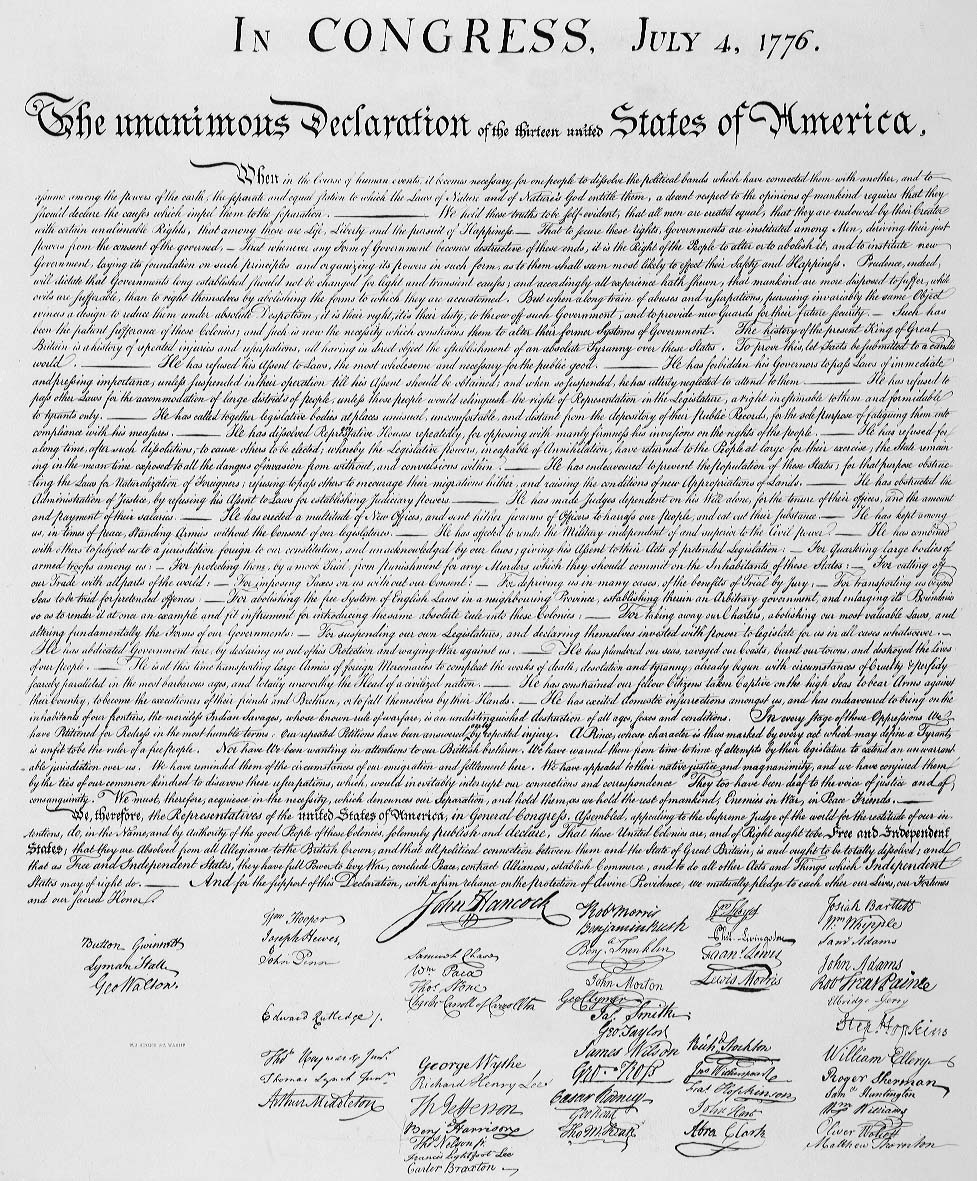
On July 4, 1776, the Declaration of Independence was approved by the Congress and the final draft was signed on August 2. John Hancock, the President of the Congress, was the first to sign. The other delegates signed to the right, below the text. The signatures are arranged by the location of the state that each delegate represented. Delegates from New Hampshire, the northernmost state, started the list, and those from Georgia, the southernmost, were at the bottom. The Declaration was signed by fifty-six delegates in all.
|
|
|
|
|
|

 The Declaration of Independence
p.13
The Declaration of Independence
p.13